분자교정요법으로 암 치료
Orthomolecular Treatment of Cancer

Google 에서 "cancer vitamins" 을 검색하면 11,000,000개의 결과가 나온다. 그 가운데 아래 페이지가 최고다.
"아침 식사 후, 내 옆 방에 머무르고 있던 라이너스 폴링 박사(Linus Pauling)를 방문하였다. 내가 들어가자 그는 계산기로 계산을 하는 데 바빴다. 그에게 내가 진료한 50명의 환자들의 경험으로 볼 때, 비타민C를 대용량으로 섭취하면 암치료 결과를 현저하게 좋게한다는 그와 카메론(Cameron) 박사의 주장이 옳다는 결론을 내렸다고 말했다."
By Abram Hoffer, M.D., Ph.D., FRCP(C)
번역: 김일용(자연의학 번역가)

아브람 호퍼(Abram Hoffer) 박사(1917~2009)
1917년 캐나다 사스캐츠원 출생. 나이아신 과량 처방을 통해 수많은 정신분열증 환자를 피료한 유명한 자연요법 의사. 노벨상을 2차례 수상한 라이너스 폴링 박사와 함께 분자교정의학을 창시하고, 비타민처방의 효과를 널리 알려 유명해졌다. 55년 동안 왕성하게 연구와 진료를 하면서 24권의 책과 500편 이상의 논문을 썼다. 2005년 12월 31일 부로, 88세를 맞이하여 "모든 사람은 55년마다 자신의 계획을 바꿔야 한다"라는 말을 남기고 환자 치료는 은퇴하고 연구에만 전념하다가 2009년 92세의 나이로 사망하였다. 그 자신이 비타민C와 B3를 꾸준히 복용하여 메가비타민요법의 효능을 입증하였다.
도입(Introduction )
1978년과 1999년 3월 사이에, 나에게 영양과 정신질환 관련 상담을 받으러 온 1,040명 이상의 환자를 보았다. 영양공급과 정신질환 관련 상담을 하는 것은 내가 1952년부터 해온 일이기 때문에 더 이상 놀랄일이 아니다. 나는 1952년 처음으로 LA에서 열린 미국정신의학협회에 처음으로 참석하였다. 그 모임에서 생화학에서 박사학위를 가진 단 한명의 정신과의사도 만나지 못했다. 그 이후로 정신과와 영영학(생화학) 분야에서 이중으로 학위를 가진 많은 과학자들이 이 분야에서 활동을 해왔지만, 이 가운데 불과 두 가지 분야의 특이한 조합을 추구하는 사람은 일부에 불과하다. 분자교정이론과 임상은 이 두 가지 분야를 통합한다. 나는 생화학에 대한 관심을 계속 유지하면서, 영양학의 임상적 측면을 의학, 나중에는 정신의학에 관하여 받은 교육을 결합하였다. 1960년에 말기 기관지암 환자를 처음으로 치료한 것은 이 두 분야의 결합으로 가능하였다.
1960년까지 사스캐츠원에 있던 내 연구팀은 정신분열증과 관련이 있는 최초의 생화학물질을 발견하였다. 나중에 크맆토파이롤(kryptopyrrole)이라 불린 이 물질의 구조를 잘 몰라, 우리는 그냥 자주색 성분(mauve factor)이라 불렀다. 우리는 수천명의 환자들을 대상으로 검사를 한 후에 정신분열증 환자의 75% 이상이 소변에서 이 물질을 배출한다는 사실을 알아냈다. 이 물질은 또한 다른 정신질환자 그룹의 약 25%에서, 심하게 스트레스를 받아 신체적으로 아픈 환자들의 약 10%, 정신분열환자의 직계 가족이지만 정상적인 사람의 약 5%에서 발견되었다. 이 물질은 환자들이 어떤 방식으로든 회복되면 사라졌다. 특히 관심을 끄는 것은 폐암 환자 8명 가운데 5명에서 이 성분이 있었다는 것이다.
1960년에 한 은퇴한 정신질환있는 교수가 사스카툰에 있는 우리 대학병원 정신과에 입원하였따. 그는 폐의 기관지종양이 있었는데, 정신적 문제를 나타낼 즈음에는 뇌에 2차 전이가 된 것으로 밝혀졌다. 그는 1~2개월 내에 사망할 것으로 보고 말기환자 병동에서 보살펴졌다. 그 전에 퇴원하여 아내와 간호사와 보살핌을 받도록 하였으나, 몇 주후에 자기 행동을 통제할 수가 없어 다시 입원하였다. 이 환자가 우리 병동에 입원한 사실을 알자마자, 나는 그의 소변을 채취하여 자주빛 요소가 없는 지 확인하였다. 이 물질이 있음을 확연하게 알 수 있는 충분한 양을 배출하였다. 나는 그의 레지던트에게 매 식후에 나이아신 1g과 비타민C(아스크로빈산) 1g을 처방하도록 하였다. 이때쯤 나는 이 두 가지 비타민을 함께 고용량으로 복용하는 것이 진단명에 상관없이 소변에 이 성분을 배출하는 환자들에게 매우 효과가 있다는 사실을 알고 있었다. 다행히, 이 환자의 레지던트는 내 충고를 받아들였다(그 환자가 내 담당은 아니었지만, 당시 나는 그 대학병원 정신의학연구소 소장이었다). 이 환자가 두 비타민을 금요일 오후에 시작하였는데, 그 다음 월요일에 정상적인 정신상태를 보였다.
이 환자의 아내를 진료한 적이 있어서 이 환자가 정상적인 생활을 하던 시절부터 그를 알고 있었다. 그가 회복된 후에도 이 두 가지 비타민을 꾸준히 복용하도록 충고하였다. 1960년 우리 연구소는, 캐나다에서, 아마도 전 세계에서, 이 두 종류의 비타민을 500mg짜리 정제(tablet)로 구할 수 있는 유일한 곳이었을 것이다. 이 알약들은 우리의 치료 목적에 맞게 제조되었다. 이렇게 고용량을 작은 정제로 복용하면 들어간 완충물질 때문에 환자들이 고통스러워하게 된다. 나는 그 환자에게 매월 받으러 온다면, 공짜로 이 두 가지 비타민을 제공하겠다고 했다. 이 말은 그가 매월 1회 나를 보러와야 하고, 내가 그의 정신상태를 감정할 수 있는 기회를 갖게된다는 것을 의미하였다. 나는 그기 암에서 회복될 것이라고는 기대하지 않았다. 그는 암진단 결과를 통보받았고, 나도 인정하였다. 놀랍게도 그는 계속 나를 찾아왔다. A12개월 후에, 나는 이 환자 경과를 잘 알고 있던 암병원 소장과 점심을 같이 하였다. 그의 말에 의하면, 종양에 3개월마다 하는 X레이 검사에서 점점 작아지거니 이제 더 이상 보이지 않는다는 것이었다. 이 환자는 말기암 진단을 받은 후 30개월 정도를 더 생존하였다. 그가 사망하면 대학병원에서 시체부검을 하기를 희망하였다. 불운하게도, 그는 다른 병원에서 사망하였고, 그 사실을 몇 일 후에 알게 되었다. 그는 암으로 사망한 것이 아니었다.
2년 후에 내가 이전에 우울증 치료를 하였던 한 여성이 나를 찾아왔다. 이 번에 그녀가 우울한 이유는 16세 딸이 악성 유잉육종을 한 쪽 팔에 앓아 팔을 절단하기로 예약을 한 상태였기 때문이었다. 유잉종양에 가장 일반적인 치료법이 절단이었다. 나는 이 여성에거 앞의 남자 환자가 회복된 사례를 이야기했고, 증거는 없지만 비타민 복용이 해는 없고 도움이 될 가능성이 있다고 제안하였다. 딸은 매 식사 후에 나이아신아미드 1g과 아스크로빈산(비타민C) 1g을 먹기로 동의하였다. 담당 외과의사도 수술을 1개월 연기하는 데 동의하였다. 그녀는 회복되었고, 마지막으로 소식을 들었을 때 결혼을 하여 두팔 모두 멀쩡하게 정상적인 알찬 삶을 살고 있다고 하였다. 나는 비타민 B-3가 가장 중요한 요인이고 비타민C는 보조역할을 하는 것으로 결론내렸다. 나의 감독 하에 사스캐츠원에서 1960년까지 6회에 걸쳐서 정신질환 치료효과에 관한 이중맹검실험이 진행되었다. 그런 까닭에, 나는 플라시보의 강력한 영향에 대해 잘 알고 있었다. 그런데, 2명의 말기암 환자가 비타민으로 회복되자, 플라시보보다 더 효과적인 것이 있다는 강력한 증거가 되었다.
내가 브리티시콜럼비아주(BC) 빅토리아에서 개업을 한 1977년까지 더 이상 암환자를 보지는 않았다. BC에서 전문의들은 가정주치의가 추천을 하지않으면 환자를 받지 않는다. 정신과전문의로서, 정신질환을 가진 환자들을 추천받았지만, 대부분 경우 추천 이유를 잘 알려주지 않았고, 환자들 보고서야 내게 온 이유를 알 수 있었다.
A.S라는 이름의 나이든 여성 한 분이 췌장 상부에 암이 있다며 나를 찾아왔다. 황달이 계속 있었다. 담당외과의사는 이 환자의 췌장 상부에 큰 종양이 생겨서 담관을 막고 있다는 것을 발견하였다. 담관을 막고 우회수술을 하고 마취에서 깨어나자 의사가 3~6개월 동안 더 생존할 수 있다고 말했다고 한다. 서점에서 일을 한 그녀는 노먼 커즌스( Norman Cousins)의 책 "질병의 해부(Anatomy of an Illness)"을 읽고, 그녀 자신도 비타민C를 충분히 먹으면 생존할 수 있겠다는 생각을 하고, 매일 10g씩 먹기 시작하였다. 그 다음 진료에서 담당의사에게 그 동안 한 것을 말하였다. 그 의사는 내가 메가비타민요법에 관심이 많다는 것을 알고는 내게 그녀를 추천하였다. 나는 그녀에게 비타민C g하루 섭취량을 설사를 하지 않을 정도인 40g으로 늘렸다. 나는 수년 동안 내가 진료하는 정신분열증 환자들에게 여러 영양소들을 처방해왔고, 이 영양소들 중에 어느 것이 도움이 되는 지 확신할 수 없었으므로, 이 환자도 한 가지 이상 영양소를 섭취하면 회복 가능성이 더 높을 것이라고 추측하였다. 그리고 나는 비타민 B-3, 셀레늄, 황산아연(zinc sulfate)을 추가하였다. 6개월 후에 집에 있는 나에게 흥분된 목소리로 전화를 하였다. 막 CT 촬영을 마치고 나왔는데 종양이 사라졌다는 것이다. 방사선 담당의사들이 믿을 수 없어서 촬영을 반복하였다고 한다. 닫혔던 담관은 다시 열렸고, 이제 담관이 2개가 된 것이다. 생존하여 1999년 2월 사망할 때까지 건강하게 지냈다. 암으로 사망선고를 받은 지 22년이 지난 후였다.
환자들이 자신의 질병에 관심을 가지고 대담한 방법을 시도해서 의학발전에 기여하는 경우는 매우 드물다. A.S의 회복은 나의 의사로써의 진로를 바꾸었고, 현재의 암환자 치료에 큰 도움이 될 것이라 믿게되었다. 지난 중 한 공식모임에서 공개적으로 나는 그녀에세 감사를 표하였다. 그녀는 내가 또 그녀의 삶을 바꾸었다고 덧붙였다. 그녀는 또한 암의 희생자가 아니라 승리자가 된 수 백명의 암환자들의 삶도 바꾸었다.
친구, 친척, 그리고 고객들에게 자신의 회복을 이야기하여 내 진료의 성격을 바꾸어버렸다. 그 첫해에 5명의 환자가 다시 내게로 추천되어 왔다. 두번째 환자는 골반뼈를 침투하는 전립선 육종을 가진 남자였다. 더 이상 치료법이 없다는 의사의 말을 듣고 내게 보내졌다. 나는 앞의 환자와 비슷한 프로그램을 시작하였다. 그러나 이 남자환자는 하루 비타민C 10g 정도만 흡수할 수 있었으므로, 담당의사에게 1주일에 2회 비타민C 10g 씩을 주사해도 될지 문의하였다. 6개월 후에 그의 주치의가 얼마나 더 오래 비타민을 주사해야 하는지 알고 싶어했다. 종양은 이미 사라지고 없다고 했다. 곧바로 주사를 중단하였다. 9년을 더 살다가 80세에 사망하였는데, 사망 원인은 암이 아니었다.
매년 더 많은 환자들이 나에게 추천되었다. 처음에는 대부분 환자들이 소개를 하여 추천되었는데, 필요한 추천을 하는 데 상당한 설득력이 있었던 것이다. 신체적 심리적 상태를 파악한 후에, 치료 프로그램을 환자들에게 이야기했다. 나는 각 영양소들과 그 효과를 프로그램을 세세하게 설명하였다. 나는 비타민이 반드시 도움이 된다고 보장을 못한다고 덧붙이면서 상당한 효과를 나타낸 사례들을 상세히 설명하면서 그들에게 희망을 주었다. 나는 비타민 미네랄 프로그램이 생체에 이질적인 약물치료의 독성을 줄이는 대신 약물치료의 효과를 증진시킬 것이라는 점도 덧붙였다. 화학요법을 받게 된다면 비타민 미네랄 프로그램이 화학요법을 잘 견뎌내게 하고, 덜 고통스럽게 해주며, 방사선치료를 받더라고 부작용은 줄이고 효과는 높여준다고 하였다. 이런 언급은 급속하게 쏟아지던 연구문헌에 바탕을 둔 것이다. 이 프로그램은 몸이 암을 이기도록 도와주기 위해 만들어진것으로 암을 직접 공격하는 방식이 아니었다. 암에 공격적인 치료는 가정의, 외과의사, 방사선치료사와 종양의사 등 다른 내과의사들에 의해 이루어졌다. 암의 진단과 생체에 이질적인 약물치료는 환자와 다른 의사들에게 맡겨졌다. 환자들이 다른 치료를 받아야할 지 말아야할 것인가에 대해서는 조언을 하지 않았다. 약물치료를 받지 않은 사람들은 별로 없었다. 프로그램을 상세하게 설명한 후에, 심하게 우울이나 불안증을 보이면 자주 보고, 그렇지 않으면 한 번만 더 상담하도록 정하였다. 몇명 환자들은 암이 발생하기 전부터 나에게 진료를 받아오고 있었다. 그후 환자들을 추천한 의사들에게 상담보고서를 보냈다. 두번 째 면담 후에, 환자들은 가정주치의들이 돌보도록 다시 보내어졌다. 그후 나는 환자들의 추후경과를 확인하지 않았는데, 몇 년 후 내가 약 50명의 환자들을 진료한 후에 내 프로그램을 적어도 2개월 이상 지속적으로 따른 환자들이 프로그램을 따르지 않거나 적어도 2개월 동안 따르지 않은 사람들 환자들보다 더 오래 살았다는 사실을 알게 되었다.
이즈음에 나는 메사츠세츠주 Woods Hole에 있던 Arthur Sackler박사를 위한 모임에 가게되었다. 우리는 내가 비타민프로그램을 시작하던 1951년에 만난 적이 있었다. 그와 형제들은 맨해턴 중심부에서 개원하여 진료를 하고 있었다. 그들은 아마 미국 최초 분자교정 정신의학자들이었을 것이다. 그들은 히스타민을 주사하여 정신분열증 환자들을 치료하고 있었다. 집에 돌아온 후, 나는 그들의 연구를 살펴보고 그들의 관찰이 옳다는 것을 알게 되었다. 그 형제들의 방법을 따라 치료한 12명의 환자 가운데 8명이 정상으로 회복되었다. 환자들에게 확장기 혈압이 0이 될 때까지 히스타민 피하주사량을 늘려가야했기 때문에 치료법이 어려웠다. 치료는 주중 매일 정해진 프로그램이 종료될 때까지 이루어졌다. 히스타민 프로그램을 계속하지 않았다. 사용하기 훨씬 편하고 효과적인 비타민B3 메가도스법을 사용하고 있었기 때문이다. 히스타민으로 인한 홍조(피부 붉어짐)는 나이이신 복용시 생기는 홍조현상과 동일하였다. 라이너스 폴링 박사는 메이요병원(Mayo Clinic)에서 그가 스코틀랜드에서 Edwan Cameron 박사와 함께 실행한 연구를 다시 하고자 하는 것을 강하고 신중하게 비판하였다. 메이요그룹은 이 연구들 정확하게 같게 반복하였다고 주장하였지만, 그들의 문서를 자세히 읽어보면 그렇지 않았다는 것이 분명하다. 폴링 박사는 그들의 부정적인 발표에 맞서지 않았다. 그는 다른 비타민C 투여법으로 얻는 결과를 그와 카메론 박사의 연구결과를 반박하기위해 사용한 것에 대해 강하게 반발하였다. 다시 말하자면, 원래 연구를 연구를 기획한 사람들이 기술한대로 정확하게 반복하지 않으면 어느 과학자도 어떤 연구를 확증하거나 부정할 수 없다.
다음 날 아침 식사를 한 후, 나는 옆방에 머무르고 있던 라이너스 폴링 박사를 방문하였다. 내가 들어가자 그는 손계산기로 작업을 하느라 바빴다. 직접 계산을 하지 않으면 이해를 할 수 없다면서 전자궤도에 관한 작업을 하고 있었다고 했다. 나는 그에게 50명의 환자들을 진료한 경험을 바탕으로 보아 그와 카메론 박사가 옳고, 비타민C를 고용량으로 복용하면 암 치료결과가 현저하게 개선된다는 점을 말하였다. 폴링박사는 내가 그 자료를 발표할 의향이 있는 지 물었다. 나는 그렇지 않다고 말했다. 나는 의학저널에서 메가비타민요법을 호의적으로 다루는 논문을 받아들이지 않을 것이므로 불필요한 수고를 할 필요가 없을 것이라고 말했다. 메이요병원이 폴링박사를 공격한 내용을 발표한 New England Journal of Medicine은 폴링박사의 반박 글을 싣는 것을 거부하였다. 폴링박사는 나에게 내가 치료한 환자들을 추후경과를 꼼꼼하게 살피도록 강하게 요청하였다. 나는 칭찬을 받고 그렇게 하기로 합의하였다. 그는 그 연구결과를 발표할 것이라고 했다. 그런데, 집에 와서 추후경과를 조사하지 않기로 결정을 바꾸었다. 이 작업은 엄청난 노력을 요하는 일이었다. 폴링 박사가 너그러이 넘어갈 것으로 생각하였다. 2년 후, 폴링박사가 " 아브람, 그 연구 어떻게 되어가요?"라고 은근히 확인하는 편지를 받았다. 나는 그가 그 문제에 대해 진지하게 생각하고 있다는 판단을 하였다. 그때까지 나는 134명의 환자들을 진료하였다. 나는 사과를 하고 즉시 추후경과를 조사하겠다고 약속하였다. 모든 환자들을 추적하였고, 생존하고 있는 지, 어디에 살고 있고, 삶에 무슨 변화가 있는 지 조사하였다. 환자와 가족, 의사, 환자들을 다룬 병원들에 연락하였다. 빅토리아에 있는 Cancer Clinic은 검사, 진단, 치료를 약물만으로 잘 하고 있었다.
폴링박사는 치료를 받은 환자와 받지 않은 환자들의 동년배집단을 사용하여 치료결과를 결정하는 훌륭한 방법을 개발하였다. 추후조사를 끝낸 후 임상경과와 연구자료를 개인신상정보는 삭제한 상태로 보냈다. 우리는 생존기간만을 변인으로 삼기로하였다. 나에게 처음 진료를 받은 날부터 사망한 날까지 조사하였다. 이렇게 치료의 성공여부를 이렇게 확고하게 측정하는 것은 단순히 종양이 줄어들었는 지 살피는 것보다 더 유용하다는 증거들이 늘어나고 있다. 환자들은 서서히 커져가는 종양을 가진 상태로 장기간 생존하였다. 우리는 공동 저자로 발표하기로 하였다. 나는 첫번 째 논문은 폴링과 호퍼가 쓴 것으로 발표하도록 제안하였다. 비타민C를 고용량 사용(메가도스)하는 것은 처음에 그의 생각이었고, 내가 한 일은 단지 그의 결론을 검증하는 것이었다. 그의 생각은 달랐다. 호퍼와 폴링이 쓴 것으로 내 이름을 먼저 넣어야 한다고 주장하였다. 폴링 박사는 내가 임상 작업을 했기 때문에 내가 우선 저자가 되어야 한다고 생각하는 것 같았다. 그는 의학박사 학위를 받지 않았다. 내 생각에 라이너스 폴링은 가장 인도주의적인 탁월한 과학자라 생각된다. 그의 생애 동안 그는 2회의 노벨상과 거의 40차례의 명예학위, 문학박사학위, 이학박사학위를 받았다. 그가 명예 의학박사 학위를 받지 않은 것이 유감이다. 그가 인류 건강에 기여한 것은 대부분 의사들의 기여한 것과 비교가 되지 않을 정도이다. 우리는 그 논문을 그의 분석방법과 나의 임상자료를 사용하여 썼다. 그런데, 국립과학원(the National Academy of Sciences)는 그 논문을 받아들이지 않았다. 우리 논문에 대한 비판이 생긴 이유 가운데 하나는 내가 예후가 좋을 만한 환자들만 연구에 참여하게 했다는 소문이 비평가들에게 들어갔기 때문이다. 사실은 그와 반대로 나는 환자들의 선택에 관련이 없고 나에게 추천되어 온 모든 환자들을 진료해야만 하는 상황이었다. 결국 우리는 분자교정의학회지(the Journal of Orthomolecular Medicine)에다 발표하였다. 내가 편집자였고, 우리의 연구결과를 거부할 수 없었다. 원 논문은 Ewan Cameron과 Linus Pauling 박사가 공동 저술한 " Cancer and Vitamin C"에도 개정 증보되어 실렸다. Camino Books Inc, P.O. Box 59026, Philadelphia, PA 19102. 1993. Appendix IX.
우리는 한 권의 책을 쓰기 시작하였다. 나의 임상 사례 자료는 빨리 구축되었고, 폴링박사와 두번 째 논문을 발표하였으며, 그 후 내 단독으로도 몇 편의 논문을 발표하였다. 상세한 임상자료를 제외한 대부분의 책 내용을 완성하였지만, 미국에서 출판을 해줄 출판사를 찾을 수가 없었다. 주제가 여전히 논란이 많았기 때문이다. 내가 캐나다의 한 출판사를 찾았다. Quarry Press, Kingston, ONT . 몇 달 전 나는 그 사장에게 완성된 원고를 보냈었다. 이 원고에는 폴링박사가 암의 여러 형태에 대해 쓴 내용과 800여명의 환자들에 대해 내가 정리한 자료가 포함되어 있었다. 우리는 결론에서 오늘날 최적의 암 치료는 약물과 분자교정요법의 결합이며, 가능한 신속하게 치료가 이루어져야 한다고 적었다. 참고 자료를 간단히 열거하면 다음과 같다.
1)Hoffer A & Pauling L: Hardin Jones biostatistical analysis of mortality data for cohorts of cancer patients with a large fraction surviving at the termination of the study and a comparison of survival times of cancer patients receiving large regular oral doses of vitamin C and other nutrients with similar patients not receiving those doses. J Orthomolecular Medicine 5:143-154, 1990. Reprinted in, Cancer and Vitamin C, Updated and Expanded E Cameron and L Pauling, Camino Books, Inc. P.O. Box 59026, Phil. PA, 19102, 1993.
2)Hoffer A & Pauling L: Hardin Jones biostatistical analysis of mortality data for a second set of cohorts of cancer patients with a large fraction surviving at the termination of the study and a comparison of survival times of cancer patients receiving large regular oral doses of vitamin C and other nutrients with similar patients not receiving these doses. J of Orthomolecular Medicine, 8:1547-167, 1993.
3)Hoffer A: Orthomolecular Oncology. In, Adjuvant Nutrition in Cancer Treatment, Ed. P Quillin & RM Williams. 1992 Symposium Proceedings, Sponsored by Cancer Treatment Research Foundation and American College of Nutrition. Cancer Treatment Research Foundation, 3455 Salt Creek Lane, Suite 200, Arlington Heights, IL 60005-1090, 331-362, 1994.
Hoffer,A. Orthomolecular Treatment of Cancer. In Nutrients in Cancer Prevention and Treatment. Ed. Prasad,KN, Santamaria,L & Williams RM. Pages 373-391, 1995, Humana Press, Totowa, New Jersey.
4) One Patient's Recovery From Lymphoma. Townsend Letter for Doctors and Patients. #160 , 50-51, 1996
5)A new book just arrived by Burton Goldberg, edited by W.John Diamond, W. Lee Cowden with Burton Goldberg, Alternative Medicine Definitive Guide to Cancer. Future Medicine Publishing, Inc. Tiburon, California.1997. In this valuable book 37 physicians including myself, describe the alternative methods they use with clinical descriptions of some of the results they have obtained. I prefer the term complementary to alternative and expect that soon all medicine will be complementary and that physicians using only xenobiotic methods will be the exception.
요약
영양소의 고용량복용(메가도스)으로 암을 치료하는 것은 대학, 학회지, 병원 어느 곳에서도 주류 의학에 들어가지 못하고 있다. 라니너스 폴링 교수의 끈기와 헌신에 힘입어 점차 주류로 들어서고 있다. 그는 자신의 견해를 설명하기 위해 관심있는 의사들과 개인들이 자리를 만든 토론회에 참석하였다. 캐나다 정신분열증 재단(The Canadian Schizophrenia Foundation)은 세 차례에 걸쳐 토론토와 밴쿠버에서 라이너스 폴링 박사를 초청하는 영광을 차지하였다. 그리고 국립암연구소(National Cancer Institute)은 1990년 9월 회의를 개최하였다. 이 회의는 임상회의가 아니었다. 어느 누구도 어떤 영양소가 어떤 역할을 하는 지를 보여주는 임상 자료를 발표하지 않았다. 이 회의에서 폴링박사와 두 명의 동료가 그들의 연구결과를 발표하였다. 폴링박사는 이 회의에서, " 흥미롭게도 지난 10년 동안 여기에 왔는데, 제가 비타민C에 대한 연구비를 신청할 때마다 거부당하였습니다." Proceedings, National Academy of Sciences (US)는 폴링박사의 연구논문을 발표하는 것을 거절하였다. 호퍼와 폴링 박사가 공동 저술한 논문은 거부되었다.
1991년 5월 10-12, Alacer Corporation 회장인 Jay Patrick이 제2회 World Congress on Vitamin C and The Immune System를 샌디에고 Bahia Resort Hotel에서 개최하였다. 폴링박사는 1978년 Palm Springs에서 제1회 비타민C에 관한 세계회의를 주최하였다. 이 회의에서 비타민C와 중간신진대사에 관한 연구로 노벨상을 받은 Dr. Szent-Gyorgyi, Dr. Linus Pauling, 그리고 비타민C 메가도스를 처음 사용한 Dr. Fred Klenner가 연설을 하였다. 제2회 세계회의에는 저명하나 비타민 연구자와 임상의사들을 초청하였는데, 그 가운데는 Dr. E. Cheraskin, Dr. C.A.B. Clemetson, Dr. E. Ginter, Dr. J. Priestly과 같은 사람들도 포함되어 있었다. 그들의 논문들은 분자교정의학회지(Journal of Orthomolecular Medicine Volume 6, 1991)에 실렸다. 나도 당시 내가 말기암 환자들을 비타민C로 치료하던 임상과정에 관한 보고서를 발표하였다. 폴링박사도 비타민C와 암에 관한 연구 개요를 훌륭하게 발표하였지만, 논문으로 출간되지는 않았다. 폴링박사는 탁월한 연설가였고 매우 정직하고 직설적이었다. 그의 논문에 포함된 다음 문구가 발표자료의 일부분을 맛보게 해줄 것이다. "1965년 Irvine Stone 박사가 내가 한 이야기를 듣고 편지를 보내왔는데, 나는 앞으로 25년 더 살면서 그 기간 동안 과학자들이 발견한 것을 읽어보고 싶고, 하루 비타민C 3g을 먹으면, 25년이 아니라 50년도 더 살 수 있을 것이라고 말했다. 그 당시 나는 비타민C 하루 복용량을 50배로 늘려 3,000 mg, 나중에는 100배에 해당하는 6000mg, 그 다음에는 300배로 늘렸지만, 여전히 최적 섭취량은 확실하게 알 수 없다. 내가 300배에 해당하는 18,000mg에서 멈춘데는 현실적인 이유가 있다. 매우 중요한 이야기이다. 의사들이 환자들에게 변비는 그냥 두어도 된다고 알려야 한다는 글을 읽었다. 나는 변비가 되지 않도록 해야한다고 생각한다. 불필요하게 긴 시간 동안 독성이 있는 노폐물을 몸에 담고 다니는 것은 해롭다고 보기 때문이다. 내가 비타민C에 관심을 갖도록 한 것은 Irwin Stone이지만. 내가 비타민에 관한 책을 쓰도록 한 삶은 Victor Herbert였다." 나는 몇 일 전에 National Academy of Sciences가 출판한 질병 치료에 관한 책 한 권을 입수하게 되었다. 이 책은 비타민과 그 효과에 대한 언급은 없지고, 흔한 감기에 관한 것이었다.
16 차례 통제실험을 발표한 보고서는 비타민C가 감기를 예방하거나 치료하는 데 효과가 없다고 적고 있었다. 이 통제실험은 내 책에서 언급한 것이 분명한데 그 저자들은 내 말에 귀를 기울이지 않은 것 같다. 이 실험의 모든 사례는 비타민C가 효과가 있다는 것을 분명하게 보여준다. 사소한 발표 착오일 수 있다. 몇 년 전 잡지를 오려서 내게 편지로 보낸 사람들이 있었다. 그 가운데 한 사람은 그 잡지 기사를 보고 비타민C 복용을 중단했다고 했다. 기사는 예일대학교 의대 교수의 글을 인용한 것이었다. 3~4주 전에 비타민C가 간에 부담이 되므로 하루 1g이나 복용해서는 안된다는 그의 주장을 예일의대에서 말한 사실을 들었다. 나는 그에게 편지를 보내서, 나는 비타민C에 관한 자료들을 읽을 만큼 읽었고, 매년 2~3천개의 비타민C에 관한 새로운 글들이 발표되는 데 그 자료는 빠뜨린 것 같으니, 비타민C가 간에 해가 된다는 자료를 좀 보내달라고 하였다. 그는 예일의대에 걸맞는 신사였다. 내가 종종 이런 편지를 보내면 답장이 없는데, 그는 내게 답장을 보내, 그냥 실수로 한 말이라고 했다. 그게 다였다. 지금까지 내가 알기로 그가 잡지사에 실수라는 사실을 말하지 않았지만, 내게는 분명히 말하였다. 비타민C와 관련된 이런 종류의 수 많은 실수들이 있고, 어떤 것들은 의도적으로 사실을 왜곡하기도 한다. 어떤 사람들은 경제적 이익 때문에 비타민으로 건강을 증진시키는 것을 반대하기도 한다.
이 최초의 심포지움에는 연구과학자와 임상과학자들이 참석하였는데 이 두 분야의 자료가 복합적으로 나타난 최초의 일이다. 참석한 인원은 많지 않았으나 질적으로 참가인원의 부족을 보상할만하였다. 그곳에는 나는 Dr. Patrick Quillin을 만났는데, 그는 미국암치료센터 영양부분 부회장이었다. 그는 영양과 암의 연관성을 심의할 회의를 개최할 생각을 하고 있었다. 나는 훌륭한 생각이라 생각하고, 그렇게 하도록 격려해주었다. 첫번째 심포지엄은 1992년 11월6일부터 8일까지 오클라호마 툴사(Tulsa)에서 열렸다. 심포지엄의 주제는 "암 치료에서 보조영양(Adjuvent Nutrition in Cancer Treatment)"이었다. 300명 이상의 의사들과 다른 인사들이 참석하였다. 7개 대학과 6개 이상의 암 연구소가 참가하였다. 마지막 날 오후에는 나와 토론토의대 Rudy Falk교수의 임상연구 결과 발표가 있었다. 이 회의는 학계의사들과 분자교정 의사들이 화기애애하게 정보를 나눈 첫 번째 회의였다. 이 회의는 암연구재단과 미국영양대학(the American College of Nutrition)이 공동 후원하였고 , 진행과정으로 출판되었다.
Tulsa Conference에서 나는 어쩌다가 암환자 치료에 관여하게 되었는 지 설명하였다. 나의 초기 자료들은 메가도스에 비타민C를 추가하면 치료 결과를 확연하게 개선시켰다. 나는 이 사실을 라이너스 폴링에게 설명하였다. 그는 내가 진료한 환자들을 주의깊게 추적하고, 자신이 개발한 분석법을 통해 자료를 분석하도록 제안하였다. 우리 둘의 최근 연구에서 비타민C를 추가하면 암 치료 결과를 두드러지게 좋게 한다는 결론을 내렸다. 첫번 째 연구에서 1977년 8월부터 1988년까지 진료한 환자 134명의 환자들을 1989년 12월31일까지 추적 조사하였다. 우리는 분자교정요법을 여성 관련 암 환자에게 적용하면 평균수명이 무작위 통제집단에 비해 20배 길어졌고, 다른 암 환자들은 12배 수명이 길어지는 것으로 나타났다. 이 결과는 우리가 앞서 발표한 자료 같았다. 비타민C 한 가지만으로는 10% 환자들이 좋은 결과를 보였지만, 다른 영양소를 추가하면 약 40%에 이르는 환자들의 반응이 좋은 것으로 나타났다.
분자교정요법은 삶의 질을 향상시킨다. 방사선치료와 화학요법의 부작용을 줄여준다. 프로그램은 적용하기 쉽다. 이 프로그램을 따를 수 없는 환자들은 화학요법을 받는 환자나, 심한 구토나 메스꺼움으로 고통스러운 환자들이나 목에 궤양으로 영양제들을 삼킬 수 없는 환자들이었다. 분자교정요법은 암과의 전쟁에서 한 걸음 전진하는 것이므로 충분히 탐구되어져야 한다. 현재 엄청난 자금이 화학요법과 방사선 치료 연구에 투여되어야 하는 지에 대한 아무런 논리적 이유가 없다. 치료 결과를 개선할 방법과 변수들을 분류하기 위해 더 많은 분자교정요법의 활용이 필요하다.
-참고자료
1)Hoffer A: Orthomolecular Medicine for Physicians. Keats Publising, New Canaan, CT, 1989.
2)Pauling, L: Biostatistical analysis of mortality data for cohorts of cancer patients.
Proceedings National Academy Sciences, USA 86:3466-3488,1989.
3)Pauling, L and Herman, Z: Criteria for the validity of clinical trials of treatments of cohorts of
cancer patients based on the Hardin Jones principle. Proceedings National Academy
Science, USA 86:6835-6837,1989.
항암 영양소(Anti Cancer Nutrition )
단식에서 주스 단식, 저지방, 무설탕 식이요법 등이 행하여 지고 있다. 이 모든 식이요법이 도움이 된다는 옹호자들과 도움을 받았다는 환자들이 있지만, 이 가운데 어느 방법이 가장 좋은 지 비교할 만한 실험이 이루어진 적이 없다. 아마 결코 "최선"이라는 것은 없을 지 모른다. 개인차 때문에 각 개인이 자신에게 최선의 식단을 결정해야 할 것이다. -참고:나의 책 Hoffer's Laws of Natural Nutrition Quarry Press, P.O.Box 1061, Kingston, Ontario K7L 4Y5. 보조 요법사들이 사용하는 대부분 식단은 동물 단백질은 낮고, 채식중심이며 플라보노이드가 풍부한 채소와 과일을 강조하고 있다. 나는 환자들에게 3가지 규칙을 따르도록 충고한다. (1)단당류를 포함하고 있는 정크 푸드를 먹지 않는다.(2) 아이도 이해할 수 있는 이 단순한 규칙은 가공식품에 주로 포함되는 거의 90%의 첨가물을 멀리하게 해준다. (2) 지방 수준을 낮추려면, 유제품를 피해야한다. 거의 모든 연구가 지방 섭취가 낮은 나라들에서 암, 특히 유방암 발생 사례가 낮다고 보고하고 있다. 우유는 소에서 나오는 에스트로겐과 풀에서 나오는 파이토에스트로겐이 풍부하다. (3) 알레르기 반응이 있는 모든 음식을 멀리하여야 한다. 이 규칙들을 따르면 식단이 다양해지고, 입에 맞는 구미에 당기게 된다.
비타민 보조제(Vitamin Supplements )
보조식품에 대해 정확히 알고 복용 방법을 제대로 알고 난 후에 섭취해야 한다. 지식을 제대로 갖춘 의사의 도움을 받는 것이 바람직하다. 좋은 의사나 분자교정 영양전문가를 찾을 수 없다면, 비타민과 영영보조식품에 관한 올바는 정보를 바탕으로 스스로 보조식품을 섭취해 나가야 한다. 의사에게 자신이 하고 있는 것과 무엇을 먹고 있는 지 말해야 한다. 비타민과 복용량을 열거하여, 모든 사람이 복용해야 하는 것은 아니다. 의사와 상의하여 개인적으로 결정할 일이다. 비타민과 미네랄은 약물이나 식단과 병행 가능하다.
비타민 C.
복용량은 하루 세 번에 나누어 3~40g 사이이다. 너무 과하면 장에 흡수가 되지 않고 장에 남아서 설사제처럼 작용하여 설사나 가스를 유발하게 된다. 훌륭한 완하제이다. 최상의 복용량은 설사를 유발하지 않는다. 비타민C 형태는 순수 아스크로빈산(hydrogen ascorbate), 미네랄 소금인 나트륨 아스크로베이트(약간 짠맛이 남), 칼슘 아스크로베이트(살짝 쓴맛) 그외 다른 미네랄과 아스크로빈산 혼합형태들이 있다. In large doses it is best used as the powder dissolved in water or one of the juices. Do not use commercial grade vitamin C crystals of powders. Use CP grades as is found in drug stores or health food stores. Contrary to false rumors issued by some hostile critics of megadose vitamin use it does not cause kidney stones, does not cause pernicious anemia, does not cause sterility. A recent suggestion in a letter, to Nature, published in England concluded that more than 500 milligrams of vitamin C daily could cause DNA damage. This was based on one of a possible 20 markers that could have been used which showed no damage and a 21st marker which is seriously questioned. Some of the key scientists in this field criticized these conclusions. My only comment is that if they were correct why do my patients who take large doses of vitamin C live so much longer.
Vitamin B-3.
There are two forms. Niacin lowers cholesterol, elevates high density lipoprotein cholesterol and reduces the ravages of heart disease, but causes flushing when it is first taken. The flushing reaction dissipates in time and in most cases is gone or very minor within a matter of weeks. Niacinamide, the other form, has no effect on blood fats (lipids) but is not a vasodilator. There have been 7 international conferences on the theme niacin and cancer. This vitamin is an essential component of the enzyme systems that repair broken DNA molecules. The dose ranges from 100 milligrams three times daily to 1000 milligrams three times daily. Several studies in Detroit have found that the response rate of cancer around the head and neck was 10% on radiation alone but increased to 80% when patients were given large doses of niacinamide. Very rarely niacin will cause obstructive jaundice which clears when the niacin is stopped. For details see my book Orthomolecular Medicine for Physicians.
Vitamin E
(d alpha tocopherol succinate). This water soluble form has the greatest efficacy in controlling cancer cell growth in the test tube and is the one I recommend should be used. The dose ranges from 400 to 1200 International Units daily. Vitamin E is the major fat soluble anti- oxidant in the body and plays a role by decreasing the concentration of free radicals which are thought to be involved in the creation of the cancer. It also decreases the risk of heart disease, thus confirming what was found over fifty years in Ontario by Drs. Wilfrid and Evan Shute.
The Carotenoids.
Most people have heard of beta carotene but this is only one of a large number of carotenoids which are present in colored vegetables and fruits such as carrots, beets, tomatoes and greens. The evidence is very powerful that these mixed carotenoids as found in these foods will decrease the incidence of cancer but there is a question about the efficacy of the pure beta carotene. There is still a vigorous debate about this. I prefer carrot juice to the beta carotene. Generally it is better to have a large variety of these natural anti cancer factors. Beta carotene is very safe. The only question is whether it is the best form. Only a small portion is converted into vitamin A.
Folic acid.
Several studies have found this important vitamin has anti cancer properties, for cancer of the cervix and of the lung in lung smokers. This does not mean it is safe to smoke. It does mean that smokers should take it and immediately start their campaign to stop smoking. Women should take ample amounts to prevent neural tube disorders such as spina bifida. The US government plans to add it to flour. Canada is still thinking about it. The dose range is from 1 to 30 milligrams daily. It can be taken only on prescription.
Coenzyme Q 10. Dr. Karl Folkers discovered this substance, also called ubiquinone; toward the end of his long and distinguished career he regretted that he had not called it a vitamin. It is an odd vitamin since young people are able to make enough from the lower numbered ubiquinones such as Q 6 or Q 8 whereas older people and anyone ill is not able to make enough. It thus becomes a vitamin later in life and when one becomes ill. A few clinical studies have shown that in large doses it has anticancer properties especially for breast cancer. These range from 300 milligrams to 600 milligrams daily.
Mineral supplements
Selenium. The presence or absence of this trace element has the clearest relationship to the presence of cancer. People living on soils that are rich in selenium have a lower incidence. I recommend between 200 to 1000 micrograms daily. One of my patients took 2000 with no side effects.
Calcium and magnesium. These are generally very useful to take to maintain calcium levels in bones and blood. They have been found helpful in cases of bowel cancer. Women should receive 1500 milligrams of calcium daily from their food and supplements and half as much magnesium. There are several forms of these minerals available. Usually a person will absorb into their body anywhere between 25 and 50% of the calcium.
Zinc and copper.
There is a reciprocal connection between these two. If blood zinc levels are too high the copper levels will be too low. Because zinc can shrink enlarged prostate glands and may be helpful in the treatment of this cancer. I have been using it routinely. Also, people in Victoria tend to be low in zinc levels because our water is soft, and dissolves copper more easily from copper plumbing.
Other Substances Found in Plants.
A large number of these preparations are being used for the treatment of cancer. They include bioflavonoids, preparations from soy bean, and from mushrooms. Vaccines are also being used. Coley's vaccine originated over 100 years ago. I will not discuss these, nor other treatments such as 714-X, Ukrain, Iscador, Cartilage, Carnivora, Amygdalin (Laetril), Essiac, and many herbs. These are described in the book by Diamond, Cowden and Goldberg.
Most of the speakers at the 26th Annual International Conference on Nutritional Medicine Today, Toronto, April 1997, discussed various topics dealing with the principle and practice of orthomolecular medicine. Dr. C. Simone spoke on "Breast Cancer: Nutritional and Lifestyle Modification to Augment Oncology Care". Dr. Simone is well known for his work in researching complementary treatment of cancer.. He is an Internist, Medical Oncologist, Immunologist and Radiation Oncologist and has published several valuable books including Cancer and Nutrition and A Ten Point Plan to Reduce Your Risk of Getting Cancer. Optimum nutrition, avoiding toxic substances in food and water, and other lifestyle changes will materially reduce the risk of developing cancer.
Here is his ten point plan (1) Nutrition: calories slightly below average to maintain a weight just below the average weight. Should be high in fiber, rich in fish, fruits, and vegetables and with vitamin and mineral supplements. Eliminate additives and salt. (2) Avoid tobacco. (3) Avoid alcohol (one drink per week allowed). (4) Avoid radiation. Take X-ray only when necessary and avoid excessive exposure to sun. (5) Keep environment, air, water, and work place clean. (6) Avoid promiscuity, hormones and any unnecessary drugs.(7). Learn early warning signs like a lump in the breast. (8) Exercise and relax regularly. (9) Take a yearly physical. (10) Read his book for a self test of risk factors and symptoms that may indicate cancer or heart disease. See the report by Esteve,J. et all. Diet and cancers of the larynx and hypopharynx: the IARC multi-center study in southwestern Europe. In Cancer Causes and Control 7:240-252,1996.
These ten points should be part of every treatment program as well. The main difference is that in treatment the first point becomes even more important and the doses of supplements are much greater. The sicker a person is the more nutrients are needed in optimum doses to help the bodies reparative mechanisms. Treatment must be started as soon as the diagnosis is suspected and made, and should be concurrent with any other treatment recommended by oncologists and cancer specialists. Eventually all cancer specialists will be using these orthomolecular techniques. Supplements must be maintained while chemotherapy or radiation are being used. Studies have shown that these supplements enhance the toxic effect of the treatment on the lesion and decrease the toxic effects on the body. Patients do not suffer as much from the side effects and recover much more quickly when the treatment series is completed. They enhance the quality of life during and after treatment.
Treatment with high doses ascorbic acid either by mouth or intravenously or both carries no risk and does provide substantial advantages over chemotherapy and surgery used as the sole treatment. Between 1980 and 1995 four patients with sarcoma followed my treatment protocol (a combination of orthodox and orthomolecular treatment). The first seen in Victoria, had a prostate sarcoma invading his pelvic bones. The cancer clinic could not treat him and he was declared untreatable. He responded to the regimen and died 9 years later at age 80 clear of cancer. One is alive after ten years. One is still alive after five years. The last one, an abdominal liposarcoma died in his sixth year. Counting the first young patient I saw in 1962 who was still well several years ago, five of six responded either to the vitamin regimen alone or to the combination treatment.
암전문의들이 화학치료와 함께 비타민요법을 허용하지 않을 이유가 없다. 비타민요법은 화학요법의 효과를 상승시키고 독성은 줄여준다.
(December 26, 1999 )
Copyright C 2000 원저자의 허락으로 공개됨.
|
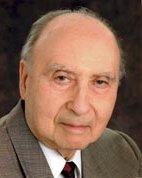
아브람 호퍼(Abram Hoffer) 박사(1917~2009)
1917년 캐나다 사스캐츠원 출생. 나이아신 과량 처방을 통해 수많은 정신분열증 환자를 피료한 유명한 자연요법 의사. 노벨상을 2차례 수상한 라이너스 폴링 박사와 함께 분자교정의학을 창시하고, 비타민처방의 효과를 널리 알려 유명해졌다. 55년 동안 왕성하게 연구와 진료를 하면서 24권의 책과 500편 이상의 논문을 썼다. 2005년 12월 31일 부로, 88세를 맞이하여 "모든 사람은 55년마다 자신의 계획을 바꿔야 한다"라는 말을 남기고 환자 치료는 은퇴하고 연구에만 전념하다가 2009년 92세의 나이로 사망하였다. 그 자신이 비타민C와 B3를 꾸준히 복용하여 메가비타민요법의 효능을 입증하였다.
*영어원문
Successful Treatment of Schizophrenia Requires Optimal Daily Doses of Vitamin B3
For over 50 years Dr. Abram Hoffer has been educating clinicians about the need to correctly (optimally) dose schizophrenics with vitamin B3 (niacin; niacinamide). For the past 10 years I have, likewise, educated numerous naturopathic and medical doctors about the very same thing. For some reason, both types of clinicians routinely treat schizophrenic patients with plenty of vitamins, minerals, and other natural health products, but they never provide enough vitamin B3. In these authors opinions, schizophrenic patients cannot get well if not provided with optimal doses of vitamin B3. This prevents the real acceptance of nutritional treatment since clinicians will not observe favorable results when inadequate treatment is provided; their schizophrenic patients will continue to suffer needlessly. To understand the importance of vitamin B3 treatment, some background information is needed. Schizophrenia is characterized by a combination of perceptual changes (e.g., hallucinations) and thought disorders (e.g., delusions).1 These aberrant mental states, which can lead to psychotic behavior, cause a tremendous amount of emotional and psychological suffering. The cause of schizophrenia, the subject of much debate, is considered a biochemical imbalance, although certain genetic factors most certainly play a role. The majority of scientists and psychiatrists subscribe to the dopamine excess theory of schizophrenia; i.e., that too much dopamine is largely responsible for the symptoms of psychosis. However, since 1952, Hoffer, the founding father of orthomolecular medicine, has researched, published, and expanded on the adrenochrome theory of schizophrenia.1,2 He and his colleagues, Drs. Osmond and Smythies, arrived at this theory by studying and researching the effects of substances such as mescaline, lysergic acid diethylamide (LSD), and amphetamines – all of which can cause a clinical syndrome in normal individuals that would be clinically indistinguishable from schizophrenia. Osmond and Smythies noted that mescaline had a similar chemical structure to that of adrenaline. Hoffer, Osmond, and Smythies concluded that since both can be converted to indoles in the body, the potential schizophrenic toxin might be an indole derivative of adrenaline with similar neurochemical properties to that of mescaline or LSD. They eventually deduced that the schizophrenic toxin was an oxidized derivative of adrenaline known as adrenochrome. Since the early 1950s, the adrenochrome theory has been validated by the following findings: 1. Adrenochrome and its close relatives – dopaminochrome (from dopamine) and noradrenochrome (from noradrenaline) – are present in the human brain.3-5 2. These compounds probably induce a combination of neurotoxic and mindmood-altering effects.3-5 3. Reducing adrenochrome, dopaminochrome, and noradrenochrome is therapeutic for the treatment of schizophrenia.6 To reduce the production of adrenochrome, Hoffer and his team decided on the methyl acceptor vitamin B3. This vitamin, previously used to treat pellagra (a disease clinically indistinguishable from schizophrenia) had relevant biochemical properties.1,2 Hoffer and his team researched the metabolism of adrenaline. They knew that the reaction involving noradrenaline to adrenaline required the addition of one methyl group. Because vitamin B3 was known to function as a methyl acceptor, Hoffer’s team theorized that an optimum dose of niacin might decrease the amount of noradrenaline that would be converted to adrenaline. Since adrenochrome was thought to be an oxidized derivative of adrenaline, vitamin B3 could help reduce the quantity of adrenochrome by simply limiting the production of adrenaline. Hoffer and his team also discovered an additional biochemical property of vitamin B3 that would help to explain its therapeutic efficacy. Vitamin B3 is a precursor to nicotinamide adenine dinucleotide, which is present in both oxidized (NAD) and reduced (NADH) forms in the body. In the brain, adrenaline loses one electron to become oxidized adrenaline. If enough NAD and NADH are available then the oxidized adrenaline is reconverted to adrenaline. These back and forth processes continue to occur in the presence of sufficient vitamin B3 coenzymes. However, in the absence of sufficient NAD and NADH, the oxidized adrenaline loses an additional electron and becomes adrenochrome. This last reaction is irreversible, and presumably occurs in much greater concentrations in the schizophrenic brain.
That being said, where is the proof? Can vitamin B3 help in the treatment of acute and chronic schizophrenia? The first report on the therapeutic use of vitamin B3 for schizophrenia was presented in 1952 at the Saskatchewan Committee on Schizophrenia. At this meeting, eight cases were presented, each demonstrating favorable effects from giving 1-10 g vitamin B3, and, in the majority of cases, equal amounts of vitamin C1 After a more involved pilot study demonstrated excellent therapeutic responses to vitamin B3, the first North American double-blind, placebo-controlled experiment was undertaken to assess whether or not this vitamin was effective for schizophrenia. The study, which began in 1952 but was not published until 1957, involved 30 acute schizophrenic patients who were each randomized to placebo, niacinamide, or niacin.1,2 They were given 1 g three
times daily for 30 days, and then followed for one year. After one year, the patients given vitamin B3 with the standard treatments at that time had more than double the recovery rate (80%) compared to patients in the placebo group (33%).7 In their second double-blind, placebo-controlled experiment, Hoffer and his team used only niacin and placebo.1,8 The study lasted 33 days and involved 82 patients (43 in the placebo group and 39 in the niacin group). Vitamin B3 once again contributed significantly to the recovery of acute schizophrenic patients. In the niacin group, 79.5 percent improved compared to 41.9 percent in the placebo group. Other parameters evaluated by Hoffer and his team included the number of patients readmitted, the number of readmissions, the number of well or much improved patients, and the number of patients who were considered cured. This data involved the following groups of patients: (1) those who only took vitamin B3 in the hospital and not in the community; (2) patients who did not take vitamin B3 in the hospital but did take the vitamin when in the community; (3) patients who took vitamin B3 in the hospital and community; and (4) patients who never took vitamin B3. The results demonstrated that patients in the community who were taking niacin (groups 2 and 3) had more community years that were free of readmissions compared to patients not taking vitamin B3 (groups 1 and 4) – 91 percent versus 62 percent of the community years free of readmissions. The entire niacin group (group 3)was readmitted 38 times for 67 readmissions (average 64 days per patient); whereas, the placebo/non-niacin group (group 4) was readmitted 36 times for 81 readmissions (average 147 days per patient). Once all the data was combined, the results revealed that the most five-year cures and best treatment responses were among the patients who took vitamin B3 in the hospital and in the community. Hoffer followed patients from 1953 to 1960, publishing a total of six double-blind, randomized controlled clinical trials. All trials confirmed the positive effects that vitamin B3 had on the recovery of acute schizophrenic patients, and that the use of this vitamin substantially reduced patients’ reliance on the health care system. In terms of treating chronic schizophrenic patients, Hoffer’s early studies did not show a favorable response among chronic schizophrenic patients who were ill longer than one year. When Hoffer reviewed this problem more thoroughly, however, he discovered that the treatment duration was not long enough to have produced adequate results. Chronic patients required vitamin B3 treatment for five or more years in order to derive observable benefits.1,9 In one study involving 32 chronic patients, no patient responded to vitamin B3 after two years of use.1 Nineteen patients discontinued the vitamin, while the remaining 13 patients continued with the vitamin treatment. Data was obtained for the years, 1956-1964. Of the patients not on niacin, the mean number of days spent in hospital was 691 compared to 79 in the niacin group. The proportion of time spent in the hospital was substantially less for the chronic patients who remained on the vitamin. In a more recent analysis of 27 chronic schizophrenic patients who had been under treatment for at least 10 years, consistent treatment with vitamin B3 produced the following results: 11 patients were able to work; two patients were able to marry and look after their families and homes; two patients were single mothers able to care for their children; and three patients were able to manage their own businesses.9 These results are remarkable when one considers the state of these patients prior to receiving optimal doses of vitamin B3. The average age of these patients was 40, the majority of them were ill for seven years before they sought treatment from Hoffer, and all had been unresponsive to previous treatments. The starting dose of niacin for adults is 1,000 mg three times daily. In our opinion, the daily dose should be slowly increased to 4,500-18,000 mg to achieve the best possible outcome. Patients must be educated about the flushing, heat, itchiness, pruritis, redness, and tingling that they will transiently experience. These benign cutaneous reactions usually begin 15 minutes after taking niacin for the first time, and are first noticed around the forehead, then descend to the thorax, and sometimes to the feet. These reactions typically abate 1-2 hours following the ingestion of niacin. Niacin causes such cutaneous reactions by inducing the production of prostaglandin D2 in the skin, leading to vasodilation and a marked increase of its metabolite (9α, 11β-PGF2) in the plasma.10 Niacin is its own anti-flushing agent because taking it regularly depletes the skin of prostaglandin D2 and prevents subsequent cutaneous reactions. At 3,000 mg daily, the flush and other symptoms will cease to be an issue following the first 2-3 days of treatment, and will practically disappear thereafter. If patients are not consistently taking these optimal doses throughout the day, they will continually re-experience cutaneous reactions and possibly discontinue treatment. The concern over liver toxicity is very minor if immediate-release niacin preparations are used.11,12 Timed-release preparations can cause liver toxicity and are not recommended for schizophrenic patients unless under very close supervision.13 In Prousky’s clinical experience, niacin is more effective and better tolerated than niacinamide for schizophrenia. Some patients prefer niacinamide since it does not cause flushing or other cutaneous reactions. Nausea and dry mouth are much more common with the use of niacinamide than with niacin. The daily dosages of niacinamide should not exceed 6,000 mg since the likelihood of nausea accompanied with vomiting is much greater.14 The prognosis for the majority of schizophrenic patients is bleak, especially if they only receive contemporary medical treatments. About 90 percent will remain unwell and nonfunctional for the rest of their lives despite receiving the most advanced drugs and social services currently available.15 Estimates of first episode schizophrenics are a little more optimistic and indicate that of five recently diagnosed patients, one will recover sufficiently to live an almost normal life without medication or with very low doses of medication. The economic costs of schizophrenia to society are enormous, amounting to approximately two million dollars for each schizophrenic patient over a 40-year course of the illness.17 In a recent publication examining the economic burden of schizophrenia in Canada, the direct and indirect health care costs associated with this disease were estimated to be 2.02 billion Canadian dollars in 2004.18 In addition, when these figures were added to the high unemployment rate with additional productivity, morbidity, and mortality losses, the estimate reached 4.83 billion Canadian dollars, for a total cost estimate of 6.85 billion Canadian dollars in 2004. The authors of this report arrived at the following conclusion: “Despite significant improvements in the past decade inpharmacotherapy, programs, and services available for patients with schizophrenia, the economic burden of schizophrenia in Canada remains high.” As clinicians we need to offer restorative care to patients who suffer with schizophrenia, a severe and usually chronic mental illness. The only reasonable conclusion to be made from this data is that all schizophrenic patients, including both acute and chronic patients, need to be treated with vitamin B3 as quickly as possible and for the duration of their lives. Vitamin B3 treatment offers significant hope of a reasonable quality of life among patients who would otherwise remain incapacitated and in and out of hospitals for the remainder of their lives. Some might improve so much that they achieve clinical remission. Since not enough clinicians utilize optimal doses of vitamin B3 with their schizophrenic patients, we hope that the information presented here persuades other clinicians to adopt this very effective and safe treatment. Respectfully, Abram Hoffer, MD (retired), PhD Jonathan Prousky, ND
Abram Hoffer, PhD, MD, FRCP(C), ROHP – President, Orthomolecular Vitamins Information Centre; professor psychiatry, 1955-1967;
Director Psychiatric Research, Department Health, Saskatchewan, 1950-1967; President Emeritus, International Schizophrenia Foundation; Editor, Journal Orthomolecular Medicine; 2007 winner of Dr Rogers Prize; pain in the neck to orthodox psychiatry. Correspondence address: 2727 Quadra Street, Suite 3A, Victoria BC, V8T 4E5 Jonathan E. Prousky, BPHE, BSc, MSc, ND – Chief Naturopathic Medical Officer and professor of clinical nutrition, Canadian College of Naturopathic Medicine. References 1. Hoffer A. Vitamin B-3 & Schizophrenia. Discovery, Recovery, Controversy. Kingston, ON: Quarry Press, Inc;1998:28-76. 2. Hoffer A. Adventures in Psychiatry. The Scientific Memoirs of Dr. Abram Hoffer. Caledon, ON: KOS Publishing Inc;2005:50-99. 3. Smythies J. Endogenous neurotoxins relevant to schizophrenia. J R Soc Med 1996;89:679-680. 4. Smythies JR. Oxidative reactions and schizophrenia: a review-discussion. Schizophr Res 1997;24:357-364. 5. Smythies J. The adrenochrome hypothesis of schizophrenia revisited. Neurotox Res 2002;4:147-150. 6. Hoffer A. The adrenochrome hypothesis and psychiatry. J Orthomol Med 1999;14:49-62. 7. Hoffer A, Osmond H, Callbeck MJ, Kahan I. Treatment of schizophrenia with nicotinic acid and nicotinamide. J Clin Exp Psychopathol 1957;18:131-158. 8. Hoffer A. Niacin Therapy In Psychiatry. Springfield, IL: Charles C. Thomas; 1962;35-71. 9. Hoffer A. Chronic schizophrenic patients treated ten years or more. J Orthomol Med 1994;9:7-37. 10. Morrow JD, Parsons WG 3rd, Roberts LJ 2nd. Release of markedly increased quantities of prostaglandin D2 in vivo in humans following the administration of nicotinic acid. Prostaglandins 1989;38:263-274. 11. Hoffer A. Vitamin B-3 and schizophrenia. Townsend Lett Doctors Patients 2001;213:20-23. 12. Paterson ET. Vitamin B3 and liver toxicity. Townsend Lett Doctors Patients 2001;207:23. 13. Mullin GE, Greenson JK, Mitchell MC. Fulminant hepatic failure after ingestion of sustained-release nicotinic acid.Ann Intern Med 1989;111:253-255. 14. Hoffer A. Vitamin B-3: niacin and its amide. Townsend Lett Doctors Patients 1995;147:30-39. 15. Hoffer A. Healing Schizophrenia. Toronto, ON: CCNM Press Inc; 2004:7-21. 16. Horrobin D. The Madness of Adam and Eve. London, England: Corgi Books; 2001:149-151. 17. Hoffer A. Treating chronic schizophrenic patients. J Orthomol Med 2002;17:25-41. 18. Goeree R, Farahati F, Burke N, et al. The economic burden of schizophrenia in Canada in 2004. Curr Med Res Opin 2005;21:2017-2028. |


No comments:
Post a Comment